
Washington, private property
Commercial and Managed Property
Every Washington city and county dead-animal service examined during this site's research is written around residents and public ground. Commercial premises sit outside almost all of it, which is why a business with a carcass on site usually has no free route at all and needs to know that quickly rather than after three phone calls.
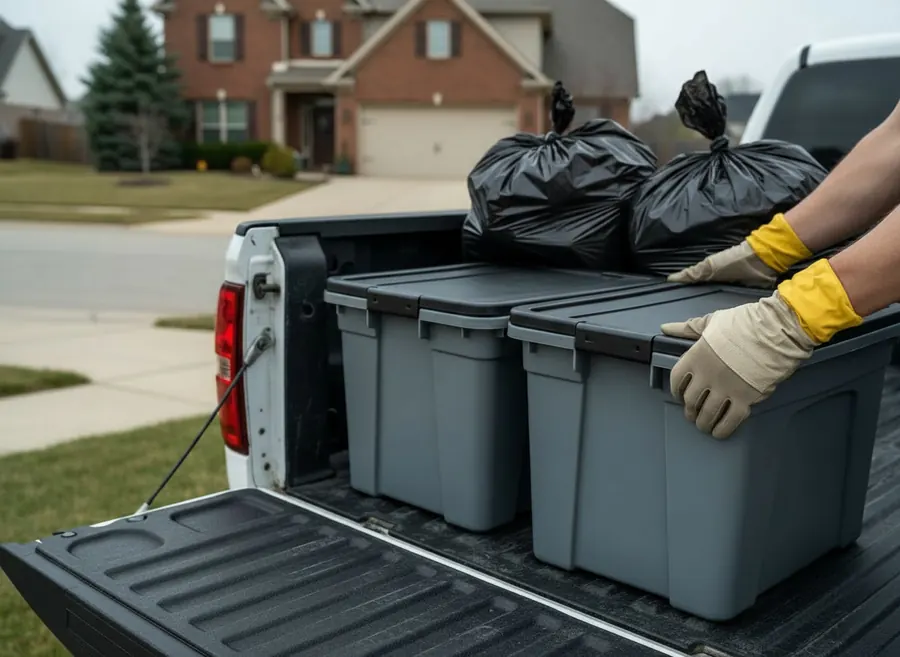
Before you pay anyone. Establish who actually controls the ground. On a leased site the responsibility often sits with the landlord rather than the occupier, and Washington's disposal duty attaches to the property owner where the animal's owner cannot be identified.
What this covers
- Parking lots, loading areas and service yards
- Landscaping, planters and perimeter strips
- Under decking, stairs and access ramps
- Rental and multi-family common areas
- Roof voids and plant rooms where accessible
Where the limit is
Anything on the adjoining public street, which belongs to the city or countyStructural or demolition workOngoing pest control programs
Commercial sites often have better access than houses, and worse scheduling constraints. Out-of-hours attendance is a normal thing to ask about on the call.
Larger animals turn up on commercial ground more often than people expect, usually against a fence line or behind a dumpster enclosure, because those are the sheltered edges of an otherwise open site.
Response timing is not published here because no Washington operator is routed on this site yet. For a commercial site with a customer-facing area it is the first thing to establish on the call.
How a call goes
- Describe the site, the access and any hours constraint
- Confirm who controls the ground and who is instructing
- Agree the price and the attendance window before anyone sets out
- Recovery, then the area is cleaned down
Questions about this situation
Will the city pick it up from our parking lot?
Generally no. The Washington municipal services examined for this site are scoped to public roadways, city property or residential customers, and a private parking lot is none of those. Some cities say so in their own words, and several scope their pickup to the roadway explicitly.
Our tenants keep reporting a smell in a common area. Where does that sit?
With whoever controls the space, which on most leases is the landlord or the managing agent for common areas. Washington's disposal duty falls on the property owner where the animal's owner cannot be identified, so it tends to land with ownership rather than with the tenant who reported it.
Can you work outside business hours?
That is a question for the call rather than something this site can promise, because no operator is routed for Washington addresses yet. It is a reasonable thing to ask and it should be answered before anyone is booked.
Not sure this is the right page? Who removes a dead animal in Washington works through the public and private split, and the county pages give the published position where you live.