
Washington, private property
Dead Squirrel Removal
In a Washington house, most of the dead squirrels that need reaching are in the attic or down the chimney, the two places WDFW says a squirrel's search for a nest site can take it. In towns, WDFW adds, squirrels mostly nest in buildings, and the introduced eastern gray and fox squirrels are now the most common tree squirrels there.
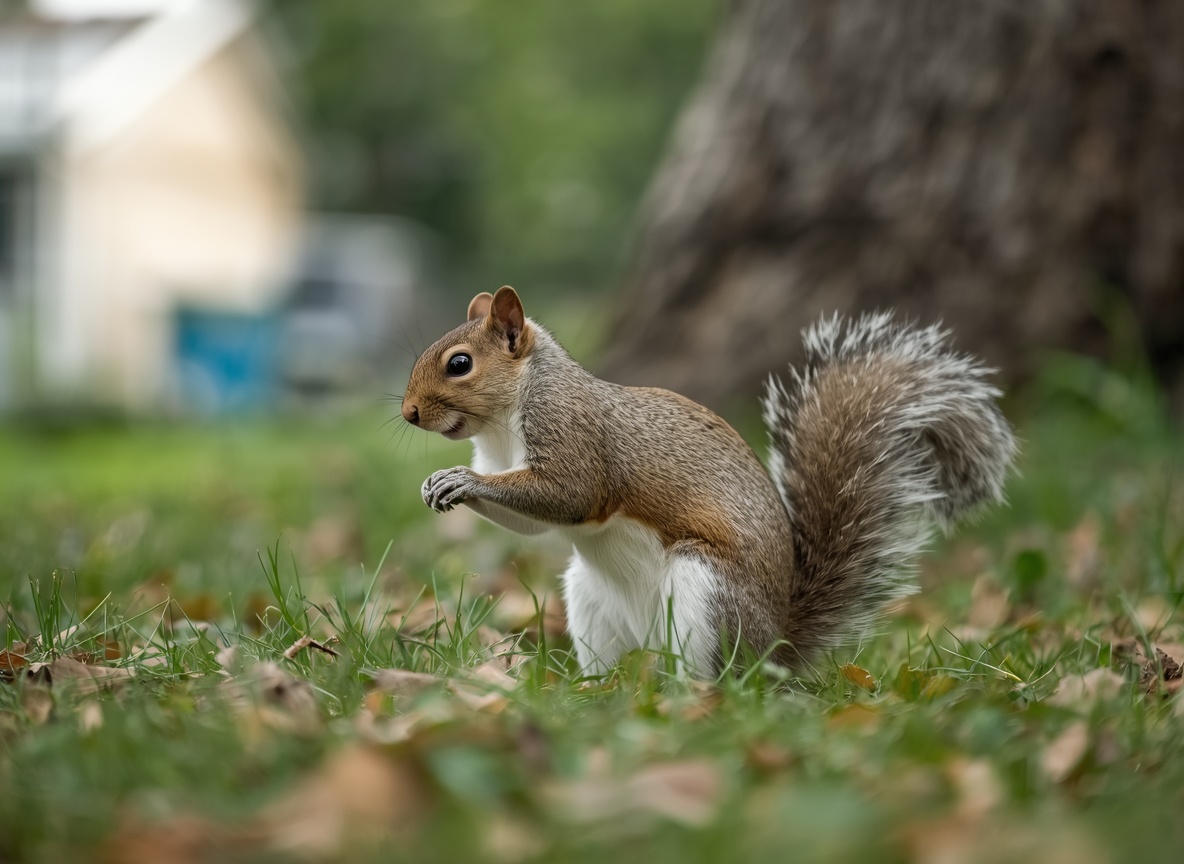
Before you pay anyone. Ask whether this is a job at all. Seattle tells residents to double-bag deceased wild animals under 15 pounds, naming squirrels, and put them in the trash, and King County allows small dead animals in your own can. A squirrel on the lawn is usually yours to handle; a squirrel you cannot get to is what the call is for.
What this covers
- Attic floors, insulation and eaves reached from inside
- Soffit and gable vents a squirrel chewed through
- Chimneys worked from the roof cap or up through the fireplace
- Garage rafters, shed lofts and roof voids over porches
- Gutters and roof valleys within ladder reach
Where the limit is
A squirrel that fell into a wall cavity from the attic is handled as information unless the attic side gives a way to it, and no wallboard is cut to recover it. A dead western gray squirrel is reported to WDFW through its wildlife reporting form.
WDFW says native squirrels chew entry holes about 2 inches across, while eastern gray and fox squirrels chew holes the size of a baseball. Finding that hole on the roofline, a vent or a soffit board usually shows which part of the attic to search first.
How a call goes
- Say where the smell is strongest and whether you have found a chewed hole
- Describe the attic access, or whether the chimney has a cap and a working damper
- If the squirrel is out on open ground, you get the published bagging advice instead of a quote
- Otherwise, who phones WDFW and what it costs are agreed by phone
Questions about this animal
Could it be a protected squirrel?
Yes. WDFW lists the red squirrel, the Douglas squirrel and the northern flying squirrel as protected, and the western gray squirrel as state endangered since 2023. Western grays survive in three isolated populations, in Klickitat and southern Yakima counties, in Okanogan and Chelan counties, and on Joint Base Lewis-McChord in Pierce and Thurston counties, and cannot be hunted, trapped or killed. Report a dead one there through WDFW's wildlife reporting form.
It was scratching in the bathroom fan and has gone quiet. Is it dead?
It may be. WDFW warns never to leave a squirrel trapped in an exhaust fan or a chimney for more than 24 hours, because it will die of dehydration. Say whether the fan housing unclips from the ceiling and where the duct ends outside. As with any squirrel, taking it out needs the WDFW or State Patrol phone call that WAC 220-400-040 requires.
It is in the chimney. Can it be reached?
Often, from one end or the other. Say whether the chimney has a cap and whether the damper opens, because those two details decide whether the squirrel can be reached from the firebox or only from the roof. Masonry and flue liners are not opened to get at it.
Why do squirrels die in attics?
Nests are one reason. WDFW says a tree squirrel litter of two to four arrives between March and June, that most species can have a second in August or September, and that most squirrels die in their first year. A dead juvenile in an attic nest fits that pattern, and so does an adult with a disease or injury that went somewhere dark and sheltered.
Can I bury it in the garden?
Usually, if the spot meets WAC 246-203-121. The rule wants three feet of soil over every part of it, a gap of 100 feet or more from any well, spring, stream or other surface water, and a place clear of seasonally flooded low ground and the 100-year flood plain. King County adds that burial on your own property is fine as long as it causes no nuisance.
Not sure this is the right page? Who removes a dead animal in Washington works through the public and private split, and the county pages give the published position where you live.