
Washington, private property
Dead Animal in an Attic or Soffit
An attic is the other large void in a house that an animal can get into and not get out of. Where the carcass is sitting on the attic floor or just inside the eave, the recovery is ordinary. Where it has worked its way into a closed cavity, it becomes a different and much more limited conversation, and it is worth knowing which one you have before anyone quotes you.
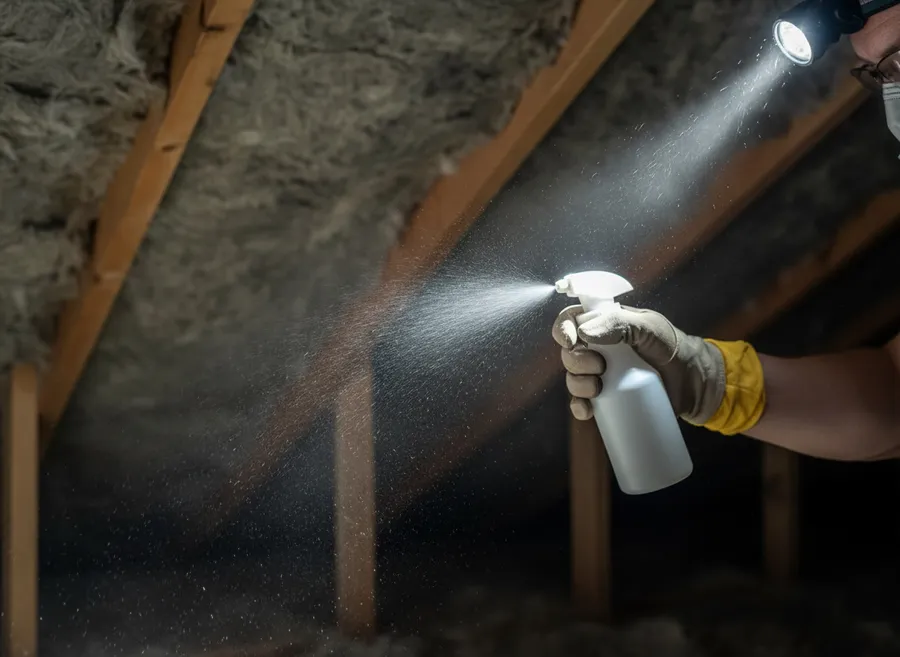
Before you pay anyone. If you can get to your attic hatch and the smell is stronger when you open it, that is useful information and it is worth saying on the call.
What this covers
- The attic floor, on top of or between ceiling joists
- Insulation batts and blown insulation where the animal is reachable
- Soffit and eave voids that open from outside
- Around vents, fans and flue penetrations
- Gable and roof vents an animal has come in through
Where the limit is
Opening drywall, plaster or a finished ceilingRemoving roof sheathing or tilesWall cavities with no existing access, which are covered separately
An attic with a hatch and something to stand on is normal working access. A soffit that unclips from outside is normal working access. A sealed cavity between framing is not, and nobody should tell you otherwise.
Attic animals in Washington are usually rats, squirrels or birds, with the occasional raccoon where a roof has an opening large enough. Size mostly determines how much insulation has to be moved to reach it.
Attic temperature swings more than the rest of the house, which changes how a smell behaves through the day. It does not give anyone a reliable number of days, and this site does not publish one.
How a call goes
- Describe the access and where the smell is strongest
- Establish whether the animal is reachable from the hatch or the eave
- Agree the price before anyone sets out
- Recovery, then the immediate area is cleaned
Questions about this situation
What if it is inside a wall rather than the attic?
Then it is worth being straight with you: most operators do not cut into drywall, plaster or a finished ceiling to retrieve a carcass, and this site will not promise it on anyone's behalf. If the animal is genuinely sealed inside a wall cavity with no other route to it, that becomes a construction decision for you rather than part of a removal visit.
Do squirrels count as wildlife under the state rule?
Yes. Washington's statutory definition of wildlife excludes old world rats and house mice and feral domestic animals, but squirrels are not on that exclusion list. So a dead squirrel in your attic is wildlife for the purposes of the state notification rule, and a dead rat in the same attic is not.
The smell is worse when the heating runs. Does that mean anything?
It can. Ducting and air handling equipment often run through attic and crawl space voids, so a system that circulates air can move odor from an unconditioned void into the rooms below. It is a useful clue about where to look rather than a diagnosis on its own.
Not sure this is the right page? Who removes a dead animal in Washington works through the public and private split, and the county pages give the published position where you live.