
Washington, private property
A Smell With No Visible Source
This is the hardest call to price and the easiest to get wrong, because the work is the search rather than the removal. It is also the situation where an honest operator is worth the most to you, because a meaningful share of these turn out not to be a carcass, and finding that out early saves you the visit.
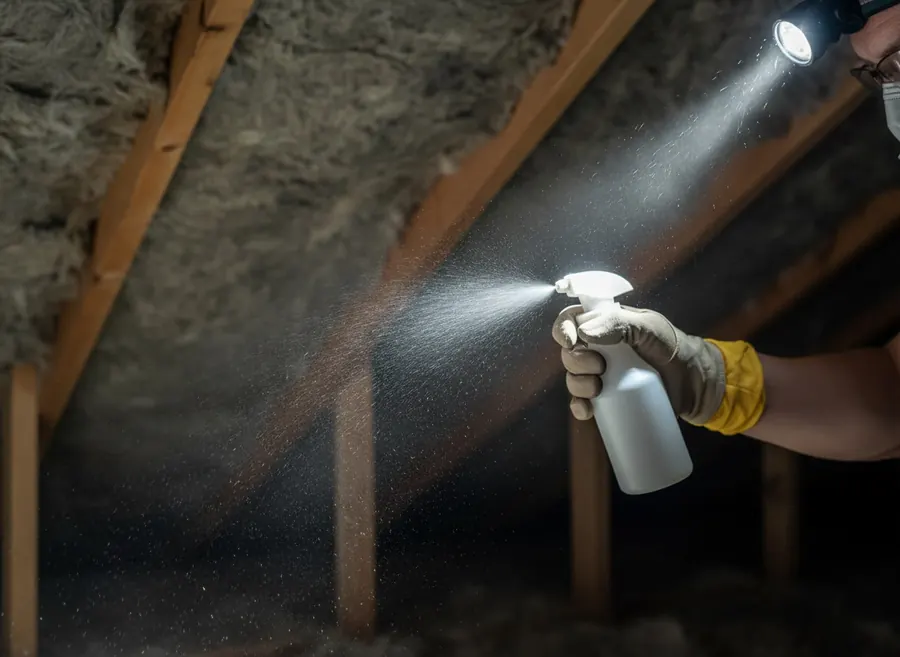
Before you pay anyone. Before anyone is paid to look, rule out the things that imitate it. A dried-out plumbing trap, a failed water heater pan, a refrigerator drip tray and standing water in an air handler all produce something people reasonably mistake for a dead animal.
What this covers
- Narrowing the source by room, level and time of day
- Attic, soffit, crawl space and underfloor checks where accessible
- Around ducting, returns and equipment
- Entry points that suggest where an animal got in
- An honest answer when the source cannot be reached
Where the limit is
Opening walls or ceilings to searchGuaranteeing the source will be foundAny promise about how long a smell will take to clear
The search covers the spaces that already open. Where the trail ends at a sealed cavity, that is said plainly rather than turned into demolition work.
A larger animal usually announces itself more clearly and is easier to locate. The genuinely difficult searches are small animals in enclosed spaces.
No figure appears here because no defensible one exists. Washington agencies publish no decomposition or odor timeline at all, and the measured work that does exist was carried out in other climates and does not transfer to a sealed void in a Washington house.
How a call goes
- Describe where the smell is strongest and when it is worst
- Eliminate the common non-animal sources first
- Search the accessible voids in order of likelihood
- If it is reachable, recover it. If it is not, you are told so
Questions about this situation
What if you cannot find it?
Then you should be told that, and told what was ruled out. A search that ends without a carcass is a legitimate outcome and it is worth something, because it eliminates the expensive possibilities. What it should never turn into is an open-ended series of visits.
It is only in one room and nothing else smells. What does that suggest?
That it is probably not being carried around by moving air, which points away from a shared void and toward something in that room: the ceiling above it, a wall cavity, a soffit, or a plumbing issue. A smell concentrated near a fixture is worth eliminating as a non-animal source before anyone is paid to search.
Could it be something other than an animal?
Frequently. A failed or dried plumbing trap releases sewer gas that people routinely describe the same way. So does standing water in a condensate pan, a blocked drain line and a refrigerator drip tray. These cost nothing to check and they are checked first for that reason.
Not sure this is the right page? Who removes a dead animal in Washington works through the public and private split, and the county pages give the published position where you live.