
Washington, private property
Dead Deer Removal
A deer that dies in a Washington pasture, behind a fence or at the foot of a driveway is lying outside the right-of-way that WSDOT and county road crews work, and it is the landowner's to deal with. WSDOT counted 21,265 deer carcasses on state highways from 2019 to 2023, and its report adds that many animals hit by vehicles die outside the right-of-way and typically go unrecorded.
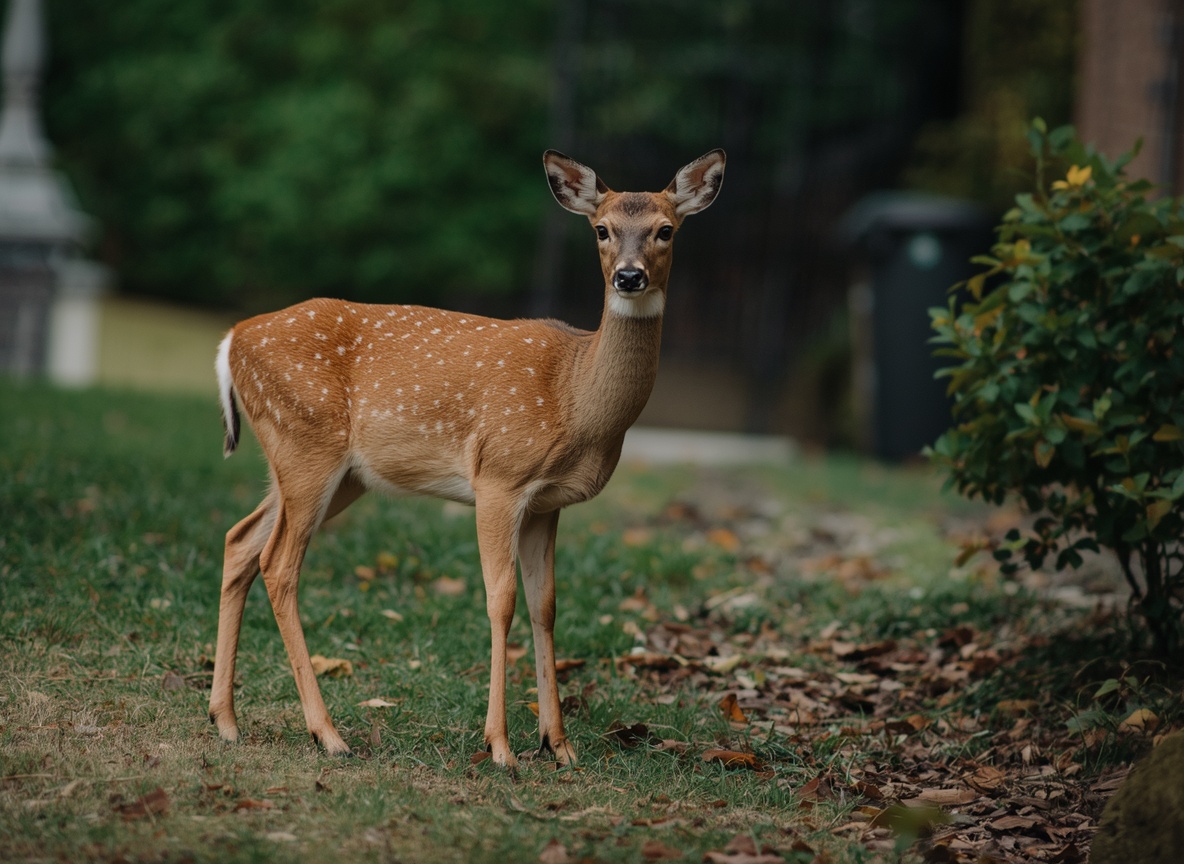
Before you pay anyone. Check exactly where it lies. On a state highway shoulder it belongs to WSDOT, reported through the State Patrol or local police. County roads and city streets are usually the county's or the city's to clear. Inside your fence, or on your lot beyond the sidewalk, WAC 246-203-121 makes it the property owner's.
What this covers
- Deer lying in a lawn, orchard or garden bed
- Pasture, hayfield and woodlot edges well back from the road
- Private lanes, driveways and ditches on your side of the fence
- A deer wedged against a shed, a fence or a hedge
- Fawns found dead in long grass or under shrubs
Where the limit is
A deer on the pavement or the shoulder stays with whoever maintains that road, and the call points you to them. Meat salvage is not arranged here. A deer still breathing after a collision is covered by WAC 220-400-040, which leaves putting it down to law enforcement and to people WDFW authorizes.
Reaching a deer is rarely the hard part, since an animal that size seldom gets under anything. Distance from where a truck can stop, the slope, gates, fencing and soft winter ground are what make one recovery harder than another, so describe those.
WDFW puts adult black-tailed does at 90 to 130 pounds and mule deer bucks east of the Cascades at up to 250. King County's household can takes animals under 15 pounds, so any grown deer is a two-person carry and a disposal problem long before species or cause of death comes into it.
This page prints no attendance window. Calls route by ZIP where an operator covers the address, and whether someone can get to yours is settled on the call. If the deer is on a state highway instead, WSDOT publishes that in many areas its carcass crews work weekdays only.
How a call goes
- Describe where the deer lies relative to the road, the fence and the nearest point a vehicle can reach
- Mention anything odd, such as no visible injury, a very thin body or patchy hair
- Deer on a county road, a city street or a state highway are referred to whoever maintains that stretch
- On private ground, the WDFW notification, the price and whether anyone can reach your address are settled by phone
Questions about this animal
A car hit it on the highway, but it died in my field. Will WSDOT take it?
No. WSDOT's published job is clearing carcasses from state highways, and a deer that died in your field is off that highway. Washington's disposal rule, WAC 246-203-121, then treats it like any dead animal whose owner cannot be identified and puts the duty on whoever owns the land it is lying on.
Will my city or county collect it?
Only in narrow cases. Seattle's animal control collects large deceased wild animals reported through its request form, after high-priority and emergency calls. Thurston County Public Works lists deceased deer or elk among the road issues residents can report on its Report an Issue page. Spokane County's road crews list deer among the animals they remove from the county right-of-way, and say that private land is off limits to them whatever the circumstances.
Do I have to notify anyone before it is moved?
Yes. A deer is wildlife, and before you drag one off your own land, WAC 220-400-040 has you telephone WDFW or the State Patrol communications office with your name, address, number and where the deer lies. It may be taken away for disposal only, and none of it can be kept. Describe it carefully along the lower Columbia River, where WDFW classifies the Columbian white-tailed deer as endangered.
The deer is still alive. What do I do?
Keep back and call law enforcement. Washington's salvage rule, WAC 220-400-040, allows only a law enforcement officer, or people WDFW authorizes, to euthanize a deer injured in a vehicle collision, and it bars anyone from killing an injured animal to salvage it. WDFW's enforcement line is 360-902-2936, and a deer struggling in traffic is a 911 call.
It has no injuries. Could it have been sick?
It could. WDFW confirmed chronic wasting disease in a white-tailed deer in Spokane County in 2024, found more cases there that season and one in Pend Oreille County, and asks anyone who sees a sick or dead animal to report it to a regional office or through its online form. Black-tailed deer also get a hair-loss syndrome caused by Eurasian lice, first reported in Washington in 1995. WDFW advises rubber gloves for anyone handling a dead deer.
Can a neighbor take it for the meat?
Only if a vehicle killed it. Washington's salvage rule covers deer and elk killed in a motor vehicle collision, needs a WDFW permit no later than 24 hours after taking possession, and requires the whole carcass, entrails included, to come off the road right-of-way. In WDFW regions where chronic wasting disease has been found, the salvager must also submit the head or lymph nodes for testing within five days. A deer that died any other way is not eligible.
Not sure this is the right page? Who removes a dead animal in Washington works through the public and private split, and the county pages give the published position where you live.